
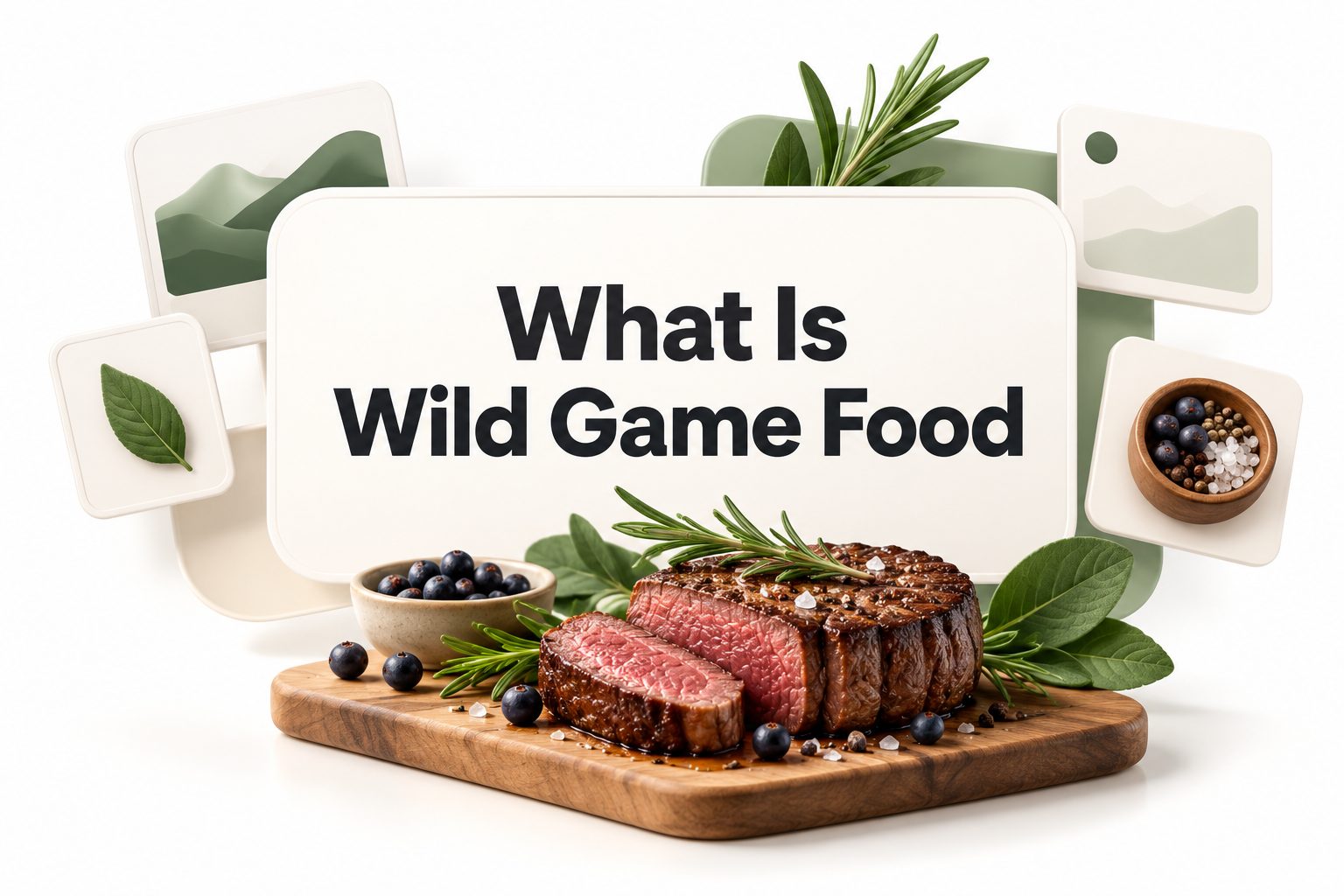
Many people hear the term at restaurants or see it on seasonal menus and wonder what is wild game food in simple terms. It refers to meat that comes from wild animals hunted in their natural habitat rather than raised on farms. This includes deer, elk, rabbit, duck, and wild boar. The flavor is often richer and leaner than regular meat.
Interest in this type of food has grown as more cooks look for natural protein sources and traditional cooking methods. People like knowing where meat comes from and how animals lived before harvest. Wild game connects modern meals with older food customs, regional hunting seasons, and outdoor cooking practices that value quality over mass production.
Wild Game Food Meaning and Basic Definition
Wild game food means edible meat taken from free living animals and birds through regulated hunting or controlled harvest. The animals eat natural plants, move freely, and grow without growth hormones or confined feeding. This natural lifestyle gives the meat a distinct taste and firmer texture.
This category covers both large mammals and small birds enjoyed in many food cultures. Venison from deer, elk meat, wild turkey, pheasant, quail, rabbit, and boar are common examples. Some regions also use bison, moose, or waterfowl depending on local laws and seasonal availability.
Common Types of Wild Game Meat Eaten Worldwide
Venison is the most familiar type and comes mainly from deer species like whitetail and red deer. Elk and moose offer similar red meat with a mild, slightly sweet taste. Wild boar provides rich pork style meat that works well in stews and roasts.
Birds form another large group with duck, goose, pheasant, grouse, and wild turkey. Rabbit and hare are valued in European cooking for tender white meat. In some areas, people also eat squirrel, alligator, or kangaroo under local food traditions and rules.
Key Facts About Wild Game Food
-
- Wild animals eat natural grasses, berries, nuts, and grains in the wild
- Meat is usually leaner with less fat than beef or farmed pork
- Flavor changes with animal age, diet, season, and habitat
- Most wild harvest follows strict hunting seasons and license rules
- Proper field dressing and quick cooling protect meat quality and safety
- Freezing at zero degrees keeps game meat fresh for many months
How Wild Game Food Differs From Farm Raised Meat
Farm raised meat comes from animals fed controlled diets and raised in fenced areas. Wild animals roam, use more muscle, and eat varied foods. That activity makes game meat leaner, darker, and more intensely flavored than beef, chicken, or farmed pork from stores.
Texture also differs because wild meat has less marbling and more connective tissue in active muscles. It needs careful cooking to stay tender. Farm meat is milder and more consistent, while wild game changes slightly with region, season, and the specific animal harvested.
Nutritional Value of Wild Game Meat
Wild game meat is naturally high in protein and often lower in total fat and calories. Venison, elk, rabbit, and turkey breast provide iron, zinc, vitamin B12, and B vitamins that support energy and muscle health. Many cuts contain useful amounts of phosphorus and potassium.
Because the fat content is low, preparation matters for moisture and taste. Lean cuts can dry out if overcooked. Using marinades, brining, slow cooking, or pairing with healthy fats like olive oil helps keep meals balanced, filling, and suitable for active lifestyles. For more healthy cooking ideas, see [Internal Link: Lean Protein Meal Ideas].
Practical Tips for First Time Game Cooks
-
- Start with mild venison or rabbit before trying stronger meats
- Do not overcook lean cuts, use a meat thermometer for best results
- Marinate tougher cuts for four to eight hours to soften fibers
- Rest cooked meat for ten minutes to keep juices inside
- Trim silverskin and excess fat to reduce bitter or gamey taste
- Pair with earthy herbs like thyme, rosemary, juniper, and sage
Popular Ways to Cook Wild Game at Home
Slow braising works well for shanks, shoulders, and wild boar leg. Low heat with broth, wine, tomatoes, and root vegetables softens the meat over several hours. Stews, chili, and pot roasts are forgiving choices that keep lean cuts moist and flavorful.
Grilling and pan searing suit tender cuts like venison loin, backstrap, elk steak, and duck breast. Cook to medium rare, about 130 to 135 degrees inside, then rest before slicing. Overcooking is the main reason game turns dry, tough, and overly strong in taste.
Slow Cooking Methods for Tough Cuts of Game
Tough cuts have more collagen that softens with long, gentle heat. A Dutch oven at low temperature breaks down fibers without drying the center. Keep liquid halfway up the meat, cover tightly, and cook until fork tender rather than watching the clock alone.
A slow cooker or pressure cooker can also work when time is short. Add onions, garlic, mushrooms, and stock for depth. Shred the meat for tacos, ragu, or sandwiches. Leftovers often taste better the next day after flavors settle overnight.
Hunting Traditions Behind Wild Game Food Culture
In many regions, autumn hunting seasons shape family meals and local festivals. Deer camps, shared processing, and holiday roasts pass skills from older hunters to younger cooks. Recipes often reflect forest foods, harvest time, and rural home cooking passed down for generations.
European traditions add driven hunts, game pies, and cured meats served in winter. North American customs include jerky, smoked sausage, and grilled venison. These practices show respect for animals through careful use, fair sharing, and minimal waste of harvested meat.
Sourcing Safe and Legal Wild Game Meat
Most wild hunted meat cannot be sold commercially in stores because of food safety laws. Hunters usually process their own harvest or use licensed facilities. Shoppers can buy farm raised venison, bison, rabbit, or duck from trusted butchers and specialty meat suppliers instead.
Always check local rules before hunting, transporting, or sharing meat across state lines. Look for proper licenses, tags, and season dates. Buy from inspected sources with clear labels, cold storage, and good reviews to reduce risk of spoilage or illegal products.
Wild Game Meat Comparison for Everyday Cooking
Type / Flavor Profile / Best Cooking Method
Venison / Lean, mild, slightly sweet / Grill, roast, stew
Elk / Tender, clean, beef like / Steak, roast, burgers
Wild Boar / Rich, nutty, firm / Braise, slow roast, sausage
Rabbit / Mild, delicate, white meat / Braise, fry, stew
Duck / Rich, fatty, crisp skin / Roast, pan sear, confit
Pheasant / Light, subtle, dry if overcooked / Roast, braise
Storage and Handling Tips for Wild Game Meat
Rapid cooling after harvest is critical for flavor and safety. Field dressed meat should be cleaned, kept cold, and processed soon. At home, refrigerate fresh game at 32 to 36 degrees and use ground meat within two days and whole cuts within three days.
For long storage, wrap tightly to prevent freezer burn using vacuum sealing or double wrapping. Label each pack with animal type, cut, and date. Thaw slowly in the fridge overnight, never on the counter, and cook thawed meat promptly for best texture.
Rules for Buying Farmed Venison and Game Products
Farmed venison and bison sold in stores come from inspected ranches that follow feeding and health standards. Check labels for country of origin, cut name, and handling instructions. Choose vacuum sealed packs with firm color, no excess liquid, and no sour smell.
Ask butchers about aging, grinding ratios, and whether sausage contains pork fat. Ground game often needs added fat for burgers. Keep receipts and freeze extra portions quickly. Trusted shops will explain sourcing clearly and suggest cooking times for each cut.
Best Side Dishes That Pair With Wild Game Meals
Root vegetables like roasted carrots, parsnips, potatoes, and squash match the earthy taste of game. Their natural sweetness balances stronger flavors. Mashed potatoes, buttered noodles, wild rice, and crusty bread soak up sauces from braised dishes and add comfort.
Greens with slight bitterness also work well, including sauteed kale, Brussels sprouts, and arugula salad. Fruit based sides like cranberry sauce, apple chutney, and pickled cherries cut richness. These pairings keep the plate colorful, seasonal, and satisfying. Try pairing ideas with [Internal Link: Venison Recipes].
Sauces and Marinades That Improve Game Flavor
Red wine reduction, mushroom gravy, and peppercorn sauce add moisture to lean steaks. Berry sauces made from blackberry, juniper, or currant bring sweet and tart contrast. Use low salt at first, then adjust after tasting because game flavor is already bold.
For marinades, mix oil, vinegar or citrus, garlic, and herbs. Buttermilk works well for rabbit and pheasant by softening texture. Marinate chilled for several hours, pat dry before searing, and avoid reusing raw marinade unless boiled safely for serving.
Sustainability and Ethics of Eating Wild Game
Regulated hunting can support wildlife balance when populations grow too large for habitat. License fees often fund habitat protection, research, and conservation programs. Using the meat fully shows respect and reduces waste compared to trophy only practices that ignore food value.
Ethical cooks choose clean shots, quick recovery, and careful processing to protect quality. They follow bag limits, avoid protected species, and share surplus with family or food programs where legal. Buying from responsible ranchers also supports land care and animal welfare standards.
Wild Game Cooking Safety Checklist
-
- Chill meat fast and keep raw game below 40 degrees during transport
- Use separate boards and knives for raw meat and ready foods
- Cook ground game to 160 degrees and poultry to 165 degrees
- Use a thermometer instead of judging by color alone
- Wash hands, tools, and counters well after handling raw meat
- Refrigerate leftovers within two hours and reheat to steaming hot
Conclusion
Wild game offers lean protein, deep flavor, and a strong link to seasonal cooking and outdoor traditions. From venison and rabbit to duck and boar, each type needs proper sourcing, safe handling, and gentle cooking to taste its best. With simple sides and sauces, home cooks can enjoy balanced meals. Anyone still asking what is wild game food will find it is natural meat shaped by habitat, care, and respect for wildlife resources.
FAQ
What is wild game food made from in simple terms
Wild game food comes from wild animals and birds harvested by hunting. Common sources include deer, elk, boar, rabbit, duck, and pheasant. The meat reflects natural diet and active life in the wild.
Is wild game meat healthy to eat regularly
Yes, when eaten in balanced portions and cooked safely. It is high in protein, iron, and B vitamins while often lower in fat. Vary protein sources and avoid overcooking lean cuts.
Why does wild game taste different from store meat
Natural diet and more muscle use create stronger, earthier flavor. Less fat and more active tissue change texture too. Age, season, habitat, and cooking method also affect final taste.
Can beginners cook wild game meat at home easily
Yes, beginners can start with venison stew, rabbit braise, or duck breast. Use a thermometer, avoid high heat for lean cuts, and follow tested recipes. Resting meat keeps it juicy.
Where can people buy wild game meat legally
Most true wild harvest is not sold retail. Shoppers can buy inspected farmed venison, bison, rabbit, or duck from butchers and specialty stores. Always check labels and local food laws.
0 Comments